

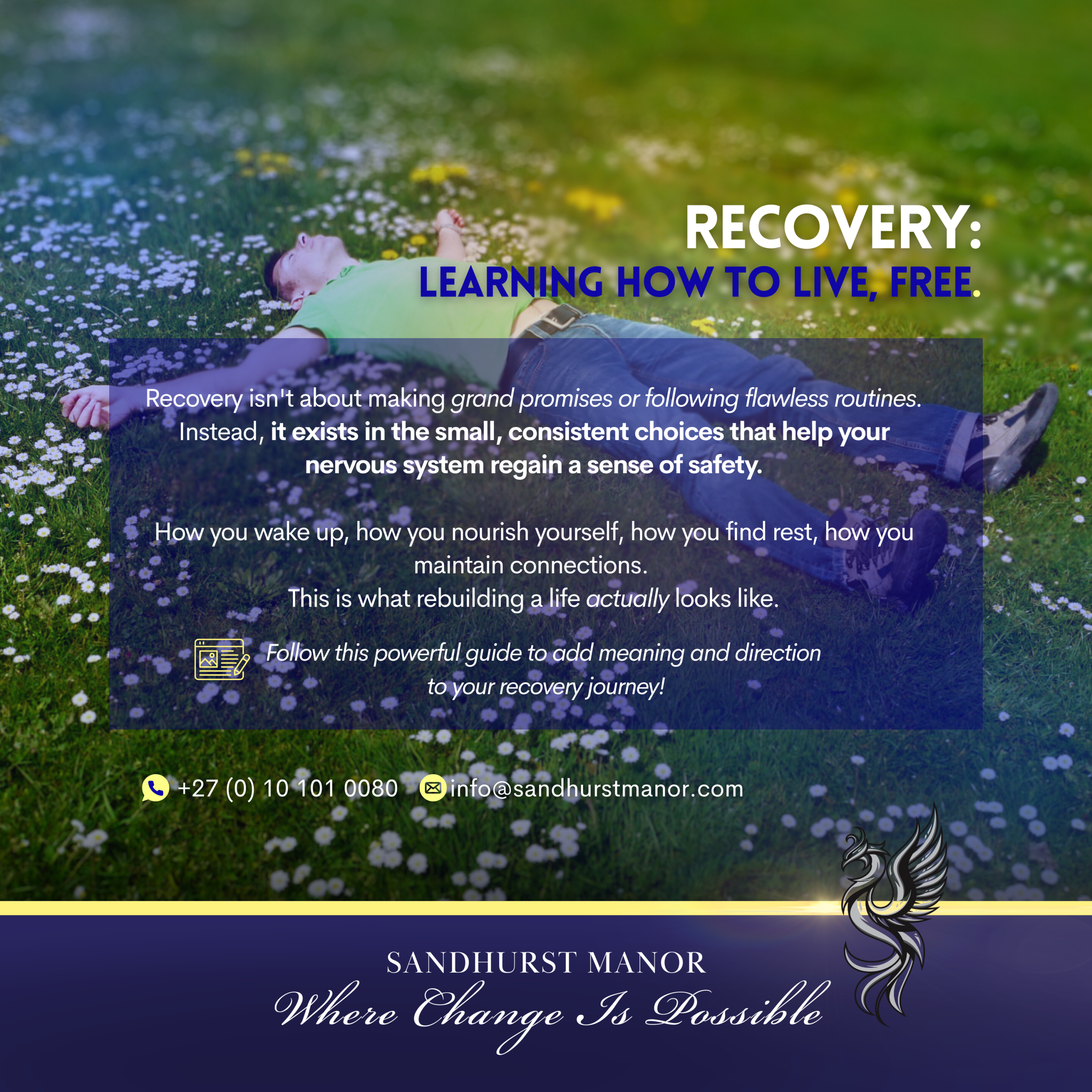

Daily Practices That Rebuild You
The start of recovery is often imagined as a moment — a decision, a crisis, a turning point. But what sustains recovery is never a single event. It is a way of living.
At Sandhurst Manor, we view recovery not as a short-term intervention or a checklist of behaviours, but as a lifestyle — a rhythm of daily practices that rebuild safety, self-trust, and connection over time. Wellness is not something you achieve once. It is something you practise, gently and consistently, every day.
This approach moves away from perfection, pressure, and performance. Instead, it centres compassion, structure, and embodied care — especially for those recovering from substance use disorders (SUDs), eating disorders (EDs), and other harmful or self-defeating behaviours.
Morning: Anchoring Rituals
How we begin the day sets the tone for the nervous system. In recovery, mornings are not about discipline or productivity — they are about orientation and grounding.
Breath and body awareness is a powerful starting point. This does not require long meditation or silence. It can be as simple as noticing your breath while seated, feeling your feet on the floor, or gently scanning the body for tension. These moments help the nervous system shift out of survival mode and into presence.
Food as nourishment, not control, is another cornerstone. In recovery, eating is not about restriction, punishment, or perfection. It is about consistency and care. Regular, balanced meals communicate safety to the body and support emotional regulation throughout the day.
Movement that feels supportive — not punitive helps re-establish a healthy relationship with the body. Gentle stretching, walking, or restorative movement builds trust and awareness, rather than reinforcing cycles of control or self-criticism.
Morning rituals do not need to be elaborate. They need to be kind, repeatable, and grounded in listening to the body.
Midday: Nervous System Repair
Recovery does not happen only in quiet moments. It must also be supported in the midst of daily demands, stressors, and responsibilities.
Micro-breaks and pacing throughout the day allow the nervous system to reset. Short pauses — even one or two minutes — help prevent emotional overload and reduce impulsive or compulsive coping responses.
Sensory grounding is a practical and effective tool. Paying attention to sound, touch, temperature, or light can quickly bring the body back into the present moment. This may include listening to calming music, holding a warm mug, or stepping into natural light.
Emotional check-ins help build awareness and self-regulation. Rather than analysing or judging emotions, simply naming them — tired, anxious, frustrated, calm — supports emotional literacy and reduces internal pressure. Emotions are information, not instructions.
These practices support resilience and help maintain balance without requiring withdrawal from daily life.
Evening: Integration Practices
Evenings offer an opportunity to integrate the day rather than replay it.
In recovery, this time is about settling the nervous system and reinforcing safety before rest.
Reflective journalling can be helpful when it is contained and intentional. This is not a space for self-criticism or emotional spiralling, but for brief reflection — noticing what supported you today, what felt difficult, and what you learned.
Non-negotiable rest boundaries are essential. Adequate sleep and intentional wind-down routines protect recovery by supporting emotional regulation and physical healing.
Honest gratitude practices help reframe perspective without minimising struggle. Gratitude in recovery is not about forcing positivity. It is about acknowledging what is steady, supportive, or meaningful — even on difficult days.
Evening rituals create closure and prepare the body and mind for rest, which is foundational to sustainable recovery.
Ongoing: Relational Wellness
Recovery does not happen in isolation. Healing is strengthened through safe, supportive relationships that reinforce accountability, belonging, and hope.
Boundary mapping helps clarify what supports recovery and what undermines it. Learning to say no, to ask for space, or to prioritise wellbeing is a vital life skill.
Support versus isolation clarity is equally important. While solitude can be restorative, prolonged isolation often reinforces shame and avoidance. Recovery thrives in connection.
This connection may come through recovery fellows, support groups, meetings, sponsors, mentors, counsellors, or therapists. It may also include spending intentional time with people who share a commitment to growth — whether through service, shared activities, or simply meaningful conversation.
Communicating needs without shame allows recovery to remain relational rather than performative. Asking for help is not a failure; it is a sign of self-awareness and strength.
Isolation reinforces survival patterns. Connection builds resilience. Recovery deepens when we choose community — not perfection.
Recovery as a Way of Living
Recovery as a lifestyle is not about getting it right every day. It is about returning, again and again, to practices that support safety, connection, and self-respect.
At Sandhurst Manor, we believe change is possible when recovery is lived — not forced. Through compassionate structure, embodied practices, and meaningful connection, individuals can rebuild their lives in a way that is sustainable, grounded, and deeply human.
Recovery is not about becoming someone new.
It is about returning to yourself, one steady step at a time.
Connect with us: 📲 +27 (0) 10 101 0080 | 📩 email: info@sandhurstmanor.co.za | 🌐 www.sandhurstmanor.com
Leave a Reply