

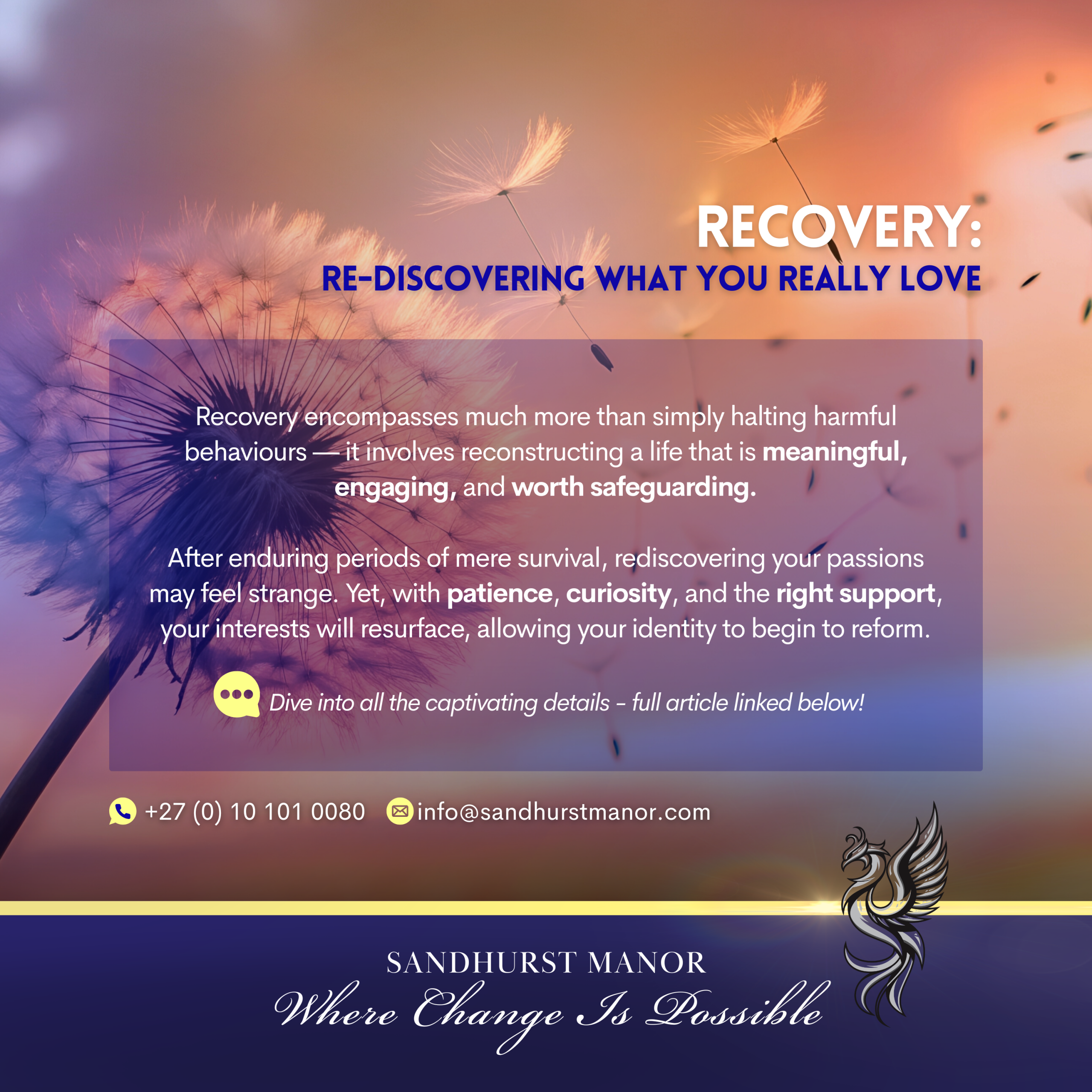

Don’t Be Afraid to Re‑discover What You Really Love
Recovery is often spoken about in terms of stopping — stopping substances, stopping behaviours, stopping patterns that cause harm. While this is a vital part of healing, it is not the whole story.
Sustainable recovery is also about starting again: learning who you are without survival strategies, rediscovering interests that were lost along the way, and building a life that feels worth staying present for.
For many individuals coming out of addiction or destructive behavioural cycles, this stage can feel unexpectedly difficult. Pleasure may feel unfamiliar. Curiosity may feel muted. Identity can feel unclear. This is not a failure of recovery — it is a normal and meaningful phase of rebuilding.
At Sandhurst Manor, we view this stage as essential. Reconnection to what brings genuine interest, meaning, and vitality is not indulgent — it is protective.
Why Rediscovery Can Feel Uncomfortable
During periods of addiction or chronic dysregulation, the brain becomes organised around short-term relief. Dopamine pathways narrow. Emotional range contracts. Life becomes focused on coping rather than curiosity.
When recovery begins, individuals often expect passion or joy to return quickly. Instead, they may experience boredom, uncertainty, or a sense of emptiness. Clinically, this reflects a nervous system recalibrating — learning to respond to slower, healthier sources of reward.
This phase requires patience rather than pressure.
Re‑discovering Identity Through Gentle Exploration
You do not need to “find your passion” to move forward. In recovery, identity is rebuilt through experiments, not declarations.
Below are practical, therapeutic tools to support this process.
Practical Tools for Re‑engaging With What You Love
1. Think in Terms of Interest, Not Passion
Passion can feel overwhelming or inaccessible early in recovery. Interest is more achievable. Ask yourself:
- What holds my attention for ten minutes?
- What feels mildly engaging rather than draining?
Small engagement is still engagement.
2. Separate Pleasure From Performance
Many people abandon activities because they believe they must be good at them. In recovery, the goal is not mastery — it is presence.
Choose activities that allow you to participate without evaluation. Walking, sketching, listening to music, cooking, or working with your hands can reconnect you to embodied experience without pressure.
3. Notice Regulation, Not Excitement
Healthy activities often feel calming before they feel enjoyable. Pay attention to how your body responds:
- Do you feel steadier afterwards?
- Is your breathing slower?
- Does your mind feel quieter?
These are early markers of healing.
4. Revisit Childhood Interests — Carefully
What you enjoyed before life became complicated can offer clues. However, revisit these gently. The aim is not nostalgia, but curiosity.
Ask:
- What drew me to this, then?
- What part of me does this speak to now?
5. Build Rhythm Before Meaning
Consistency creates safety. Choose one or two activities and practise them regularly, even when motivation is low. Meaning often follows rhythm, not the other way around.
When Rediscovery Feels Impossible
If nothing feels appealing, this does not mean you are broken. It often signals emotional fatigue or unresolved grief. Support during this phase is crucial.
Therapeutic work can help identify blocks such as shame, fear of disappointment, or beliefs that pleasure must be earned. These beliefs are common in recovery — and they are treatable.
Recovery Is More Than Abstinence
A life built solely around avoidance is fragile. A life built around connection, interest, and meaning is resilient.
Rediscovering what you love does not require certainty. It requires permission.
At Sandhurst Manor, we support recovery as a process of rebuilding identity with care, structure, and compassion — helping individuals move beyond survival and toward lives that feel grounded, engaged, and sustainable.
Change is possible — and sometimes it begins with allowing yourself to feel JOY again.
👉🏽 Connect with us:
📲 +27 (0) 10 101 0080 | 📩 email: info@sandhurstmanor.co.za | 🌐 www.sandhurstmanor.com
Leave a Reply