

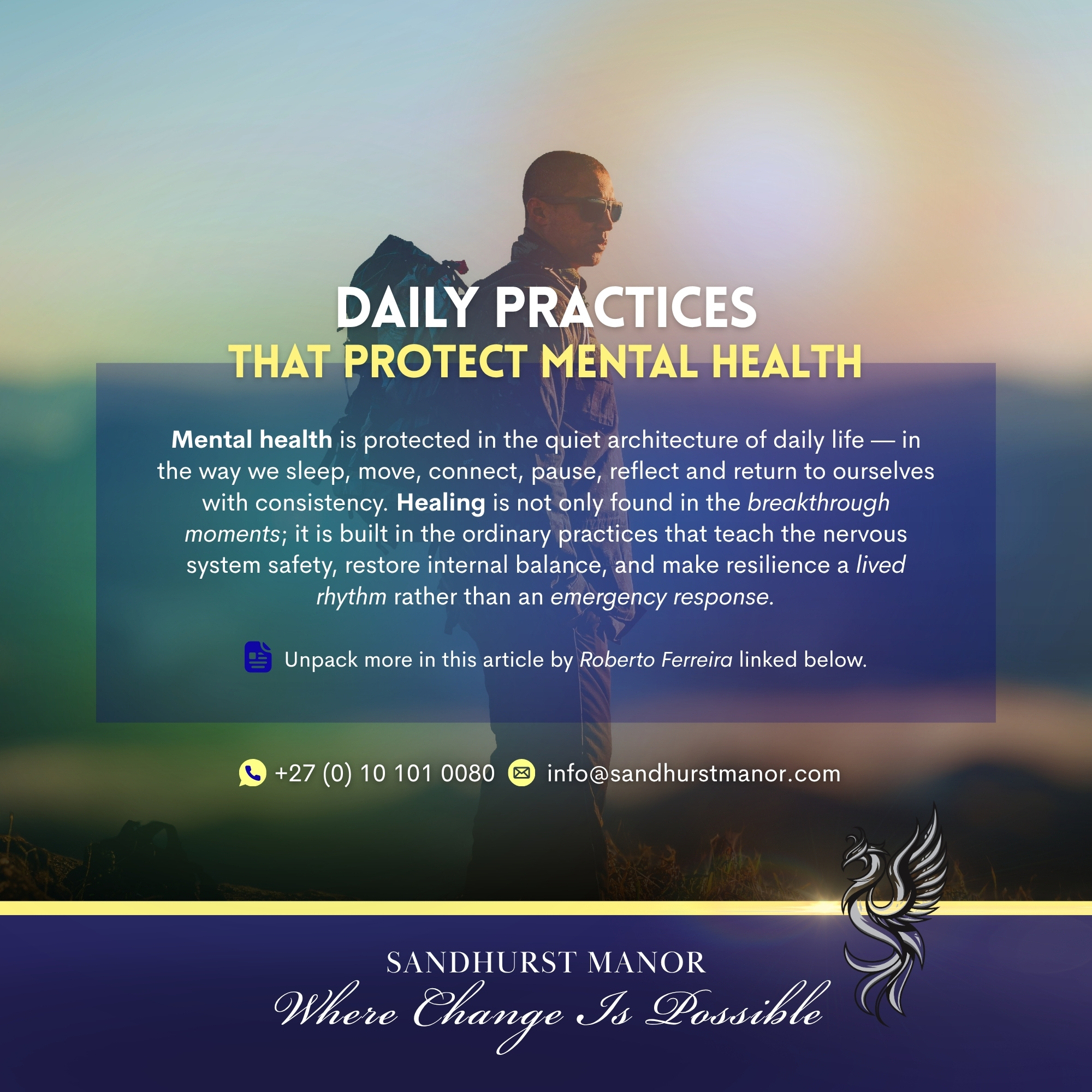

The Daily Practices That Protect Mental Health
At Sandhurst Manor, we understand that mental health is not maintained through occasional intervention alone, but through the consistent application of daily practices. While therapy and structured support are essential, the foundation of long-term wellbeing is built in the small, repeated actions that shape how we think, feel, and respond to the world around us.
One of the most powerful protective factors for mental health is routine. A consistent daily structure provides stability in an otherwise unpredictable world. Research shows that regular routines help regulate mood, reduce anxiety, and improve overall resilience by giving the nervous system a sense of predictability and control. When individuals know what to expect from their day—when they will eat, rest, engage, and reflect—it reduces internal stress and frees cognitive capacity for healthier decision-making.
Equally important is restorative sleep. Sleep is not a passive state but an active process of repair and regulation. Maintaining a consistent sleep schedule supports emotional balance, concentration, and the ability to cope with stress. Disruptions in sleep patterns are closely linked to increased symptoms of anxiety and depression, making this one of the most essential daily priorities in any recovery process.
Physical movement is another cornerstone of mental wellbeing. Regular exercise has been repeatedly shown to reduce symptoms of depression and anxiety while boosting mood and cognitive function. This does not require intense training; even moderate daily activity such as walking, stretching, or structured exercise can stimulate the release of endorphins and improve emotional stability.
In addition, mindfulness and present-moment awareness play a critical role in protecting mental health. When individuals learn to focus on the present rather than becoming overwhelmed by past regrets or future fears, they are better able to regulate their emotional responses. Studies show that even short daily mindfulness practices can reduce anxiety, improve mood, and enhance overall wellbeing.
Human beings are inherently relational, and social connection remains one of the most underestimated protective factors. Regular contact with others—whether through conversation, shared activities, or community engagement—has been strongly associated with improved mental wellbeing. These connections reduce feelings of isolation, increase a sense of belonging, and provide emotional support during times of stress.
Equally valuable is engaging in purposeful and meaningful activities. Whether through work, learning, or creative expression, having a sense of purpose anchors an individual’s identity and promotes psychological resilience. Activities that challenge the mind and encourage growth contribute to a stronger, more adaptable mental state.
At Sandhurst Manor, we emphasise that these daily practices are not perfection-driven. They are built on consistency, adaptability, and self-awareness. Mental health is not a fixed state but a dynamic process, shaped by the rhythms of daily life. Small, intentional changes—applied consistently over time—can create profound shifts in wellbeing.
Ultimately, protecting mental health is not about eliminating stress or difficulty. It is about developing the internal and external habits that allow individuals to navigate life with greater clarity, stability, and resilience. Through structure, connection, and mindful living, sustainable mental health becomes not just a goal, but a way of life.
 Author: Roberto Ferreira


Leave a Reply